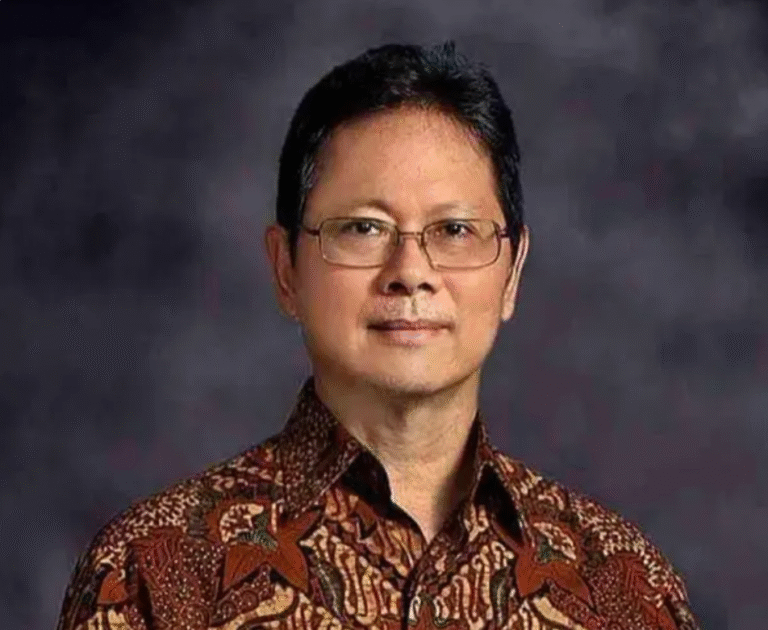

Teguh Anantawikrama. Photo: personal archive.
By Teguh Anantawikrama
Vice Chairman, Indonesian Chamber of Commerce and Industry
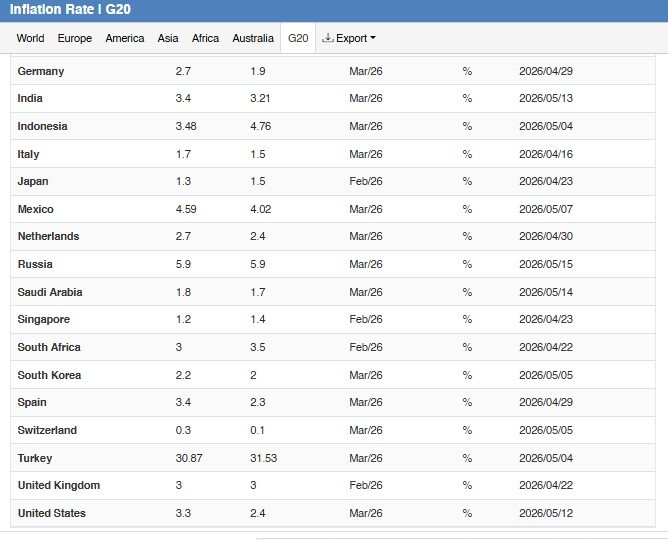
UKMDANBURSA.COM – The global economy is entering a new phase—one defined not by collapse, but by constraint. Growth is slowing toward the 2 percent range, while inflation remains stubbornly elevated, hovering near or above 6 percent in many scenarios. This is not a temporary deviation. It is a structural shift.
For decades, globalization was built on a simple principle: efficiency. Supply chains were optimized for cost, streamlined across borders, and engineered to deliver goods just in time. That model is now under strain. Energy shocks, geopolitical tensions, and tighter financial conditions have exposed its fragility. The result is not the end of globalization, but its transformation.
What is emerging is a new architecture: the supply chain web.
Read more:
Strong Dollar, Fragile Balance: What Indonesia Needs to Prepare For
No Longer the Cheapest Supplier
Unlike the linear supply chains of the past, this web is multi-layered, adaptive, and resilient. It connects multiple sourcing nodes, reroutes flows dynamically, and integrates redundancy by design. Companies and countries are no longer asking, “Where is the cheapest supplier?” but rather, “Where is the most reliable, fastest, and sufficiently cost-effective source under uncertainty?”
This shift reflects a deeper reality. In a world of slower growth, margins are tighter and demand is less predictable. In a world of higher inflation, input costs—especially energy and commodities—are more volatile.
Under these conditions, efficiency alone is no longer enough. Resilience becomes a core economic function.
The supply chain web responds to this need. It distributes risk across geographies, reduces dependency on single sources, and allows for real-time adjustment.
Increasingly, artificial intelligence will play a critical role in managing this complexity—optimizing procurement, forecasting demand, and recalibrating logistics in ways that were previously impossible. But technology is an enabler, not a cure. It cannot eliminate geopolitical fragmentation or energy constraints. It can only help navigate them more effectively.
A Multipolar Network
At the same time, the global trading system itself is becoming more layered. The world is not dividing neatly into isolated blocs, nor is it returning to a fully integrated model. Instead, we are seeing the rise of a multipolar network—a system of overlapping economic spheres connected through flexible supply relationships.
Read more:
Women Are Now Steering Indonesia’s Tourism Future
In this environment, countries behave differently. While strategic sectors may still align with political alliances, much of global trade is increasingly driven by a pragmatic calculus: a balance of cost, speed, and security. Nations and firms alike are diversifying partners, building optionality into their sourcing decisions, and maintaining multiple pathways to the same outcome.
This is how the world is adapting to the twin pressures of slower growth and rising inflation.
Monetary policy alone cannot resolve these challenges. Central banks can anchor expectations, but they cannot produce energy or rebuild supply chains.
Fiscal policy, constrained by limited space, must become more targeted—supporting the most vulnerable without distorting price signals. The real adjustment, however, is happening at the structural level.
A Strategic Opportunity
The supply chain web is that adjustment. Over time, this new system may help stabilize prices—not by eliminating shocks, but by absorbing them more effectively. Redundancy reduces the impact of disruptions. Diversification lowers systemic risk. Speed and data improve responsiveness. The result is not a return to the low-inflation world of the past, but a more balanced one, where volatility is managed rather than magnified.
For emerging economies, this shift presents a strategic opportunity. Countries that can position themselves as reliable nodes within this web—offering resources, manufacturing capacity, and geopolitical neutrality—will become indispensable. They will not merely participate in global trade; they will shape its new pathways.
The age of the single, seamless global supply chain is over. In its place, a more complex, more resilient system is taking shape. The supply chain web is not just a response to crisis. It is the foundation of the next phase of globalization—one built not only for efficiency, but for endurance. ***