

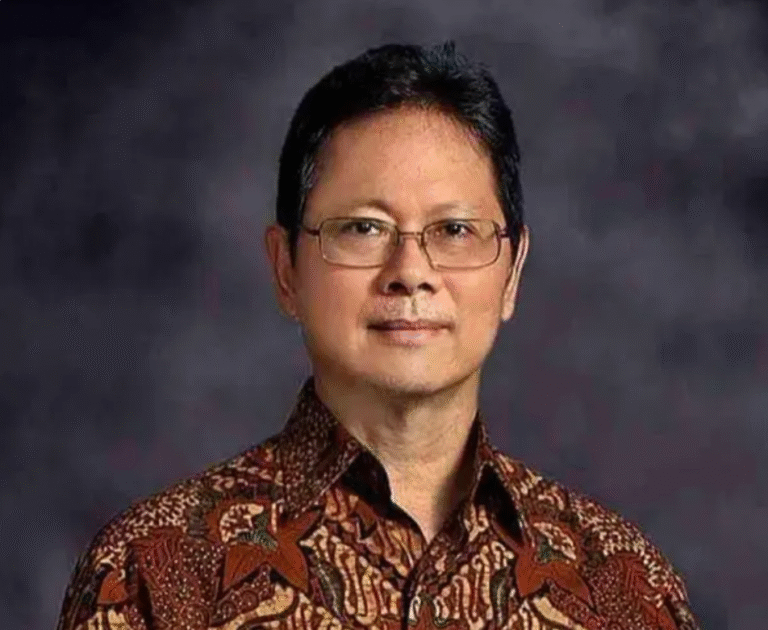
Teguh Anantawikrama. Photo: Personal documentation / ukmdanbursa.com.
By Teguh Anantawikrama
Vice Chairman of the Indonesian Chamber of Commerce (KADIN) for Technology and Digital Transformation / Chairman of the Indonesian Tourism Investor Club / Head of MSMEs Division, HIPPI
UKMDANBURSA.COM – President Prabowo Subianto’s words — “Even a single incident cannot be tolerated. The scale is enormous, but our commitment is simple: 0% incidents, 100% nutrition.” — were more than a technical directive. It was a moral and strategic statement — that nation-building must never compromise the health and safety of its people.
Today, the Free Nutritious Meal (MBG) Program has evolved far beyond a social initiative. With 11,900 community kitchens across 38 provinces serving 35.4 million beneficiaries daily — children, pregnant women, and nursing mothers — MBG has become the backbone of Indonesia’s food security transformation.

Read more:
Indonesia Takes the Lead: From Observer to Guardian of World Peace
A Quiet Revolution in Local Economies
Behind every MBG kitchen lies a thriving ecosystem. The program has directly involved over 1.2 million business actors of all sizes across Indonesia, reshaping local economies from the ground up:
• ~450,000 smallholder farmers and livestock producers supply core ingredients.
• ~280,000 micro and small food enterprises and caterers run the local kitchens.
• ~210,000 micro support businesses handle packaging, sanitation, and transport.
• ~120,000 small-to-medium distributors and cold-chain operators ensure freshness and food safety.
• ~150,000 nutritionists, quality officers, and digital monitoring staff uphold food standards.
Together, they form one of the largest integrated food supply chains in Southeast Asia, spanning over 20 economic sectors — from agriculture and fisheries to logistics, food manufacturing, and digital technology. The program now generates an estimated IDR 125 trillion (USD 7.8 billion) in annual domestic economic activity.

MSMEs: The Engine of Inclusive Growth
The real success of MBG lies not in its scale, but in its structure. Instead of a top-down scheme, the program applies a multi-scale collaborative model where each business tier has a vital role:
• Micro and small enterprises provide ingredients and manpower from local communities.
• Medium enterprises coordinate logistics and manage certified kitchens.
• Large enterprises and state-owned food companies ensure technology integration, cold storage, and quality assurance.
This framework has turned MBG into more than a welfare program — it has become a prototype of inclusive national economy, where the government acts as an ecosystem orchestrator, aligning social responsibility with productivity.
From Food Security to Food Sovereignty
In an age of global uncertainty — marked by food crises, supply chain disruptions, and climate challenges — Indonesia is charting a new path: grassroots food resilience powered by digital integration.
Food sovereignty, in this sense, is not merely about self-sufficiency. It is about a systemic capacity to ensure every citizen has access to safe, nutritious, and sustainable food — every single day. The recognition of 411 regencies and cities maintaining zero food-safety incidents under MBG proves that governance, communities, and businesses can converge around a shared national ethic: “Nutritious food is a right, not charity.”
Read more:
Women Are Now Steering Indonesia’s Tourism Future
On World Food Day 2025, Indonesia demonstrates to the world that food policy can be both compassionate and economically empowering. The MBG program is nurturing not only healthier generations but also a resilient, collaborative food economy — one that thrives on trust, inclusion, and innovation.
True food sovereignty begins at the dining table of every Indonesian child. Through MBG, the nation is not merely feeding its people — it is forging a future that is nourished, dignified, and self-reliant. ***

1 thought on “From Compassion to Food Sovereignty: Indonesia’s New Model for National Nutrition Policy”