

Teguh Anantawikrama. Photo: personal archive.
By Teguh Anantawikrama
Vice Chairman, Indonesian Chamber of Commerce and Industry (KADIN Indonesia)
UKMDANBURSA.COM – Indonesia now stands at a great crossroads. On one side, the public demands services that are fast, efficient, and hassle-free. The business sector, meanwhile, needs a bureaucracy that is agile, pro-investment, and capable of being a true partner in growth. The choice before us is clear: move forward decisively, or remain still and risk being left behind.
In this rapidly changing landscape, a fundamental question arises: is our bureaucracy ready to move as fast as the world moves? The answer depends on two foundational pillars: a strong meritocratic system and a genuine digital transformation.
Read more:
Putting “Indonesia Incorporated” into Action: Driving Synergy for Speed and Sustainability
Meritocracy: The Source of a Healthy Bureaucracy
Meritocracy is the cornerstone of a competitive and trustworthy bureaucracy. The civil service must be built on a recruitment system that reflects fairness, competence, and integrity — not proximity, seniority, or social status.
If the source is polluted, the river downstream cannot run clear. A flawed recruitment process will only produce administrative officers without a spirit of public service. Conversely, transparent, performance-based selection will cultivate public servants who possess work ethics, honesty, and — most importantly — a service attitude, the willingness to serve the people wholeheartedly.
A bureaucracy grounded in merit is not only efficient but also ethical. It does not merely execute rules, but understands their true purpose: to serve the public, not to be served by it.
Time is as Valuable as Capital
Businesses demand services that are fast, predictable, and efficient. In the context of investment and economic growth, time is as valuable as capital. Slow licensing, procurement, and administrative processes discourage investors and slow down growth.
Citizens expect the same: accessible, transparent, and user-friendly public services. They do not want bureaucracy to be an exhausting administrative maze.
The greatest challenge for today’s civil servants is to build a service mindset — to internalize the belief that being a state servant means being a public servant, not merely a procedural gatekeeper. To achieve that, recruitment, training, and performance evaluation must all be designed to promote service orientation and measurable results.
Digital Transformation: The Engine of Acceleration
In a high-technology era, digital transformation is the key driver of bureaucratic reform. Digitalization is not just a tool; it is the very mechanism through which the state becomes fast, accurate, transparent, and resistant to inefficiency and corruption.
With integrated digital systems, public services can be delivered end-to-end — from submission to completion — without face-to-face interaction, which often opens the door to irregularities. Data can be managed in real time, and performance evaluation can be done objectively based on output, not attendance.
The civil servants of the future must be solution-driven, data-literate innovators — not merely administrative executors. They must think collaboratively, analytically, and creatively, harnessing artificial intelligence, big data, and technological innovation to meet public needs efficiently and effectively.
Move Fast to Grow Fast
One simple but crucial principle: the faster we move, the faster we grow.
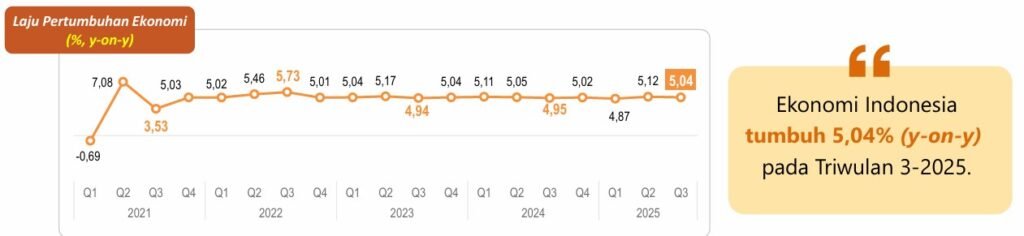
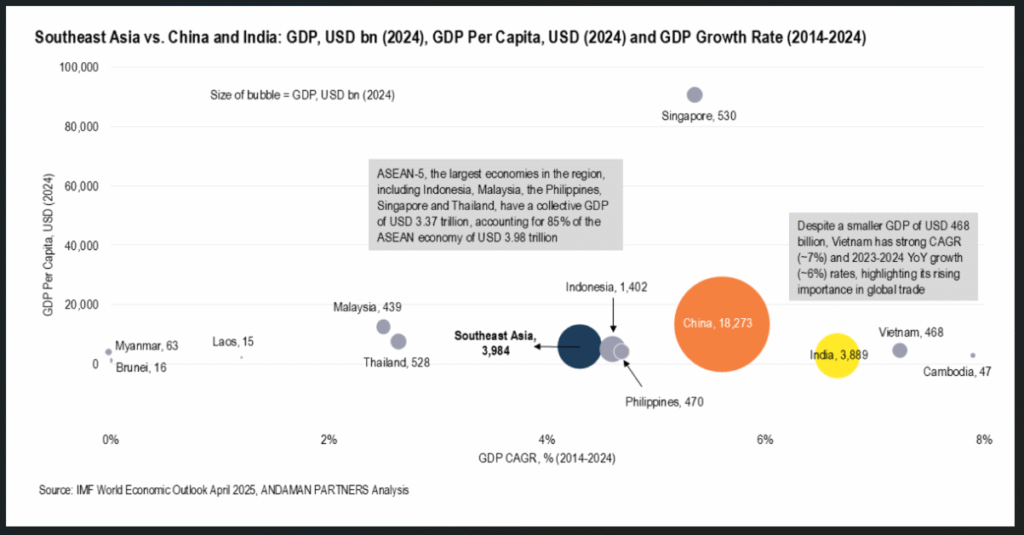
The speed of bureaucratic adaptation determines a nation’s competitiveness. Indonesia’s economy grew around 5.0% in 2024, according to the Central Statistics Agency (BPS) and Reuters. Much of this growth was driven by the private sector’s expansion — particularly in industry, logistics, and digital services. The World Bank emphasized that private sector dynamism remains the primary engine for productivity and job creation.
However, this growth can only be sustained if supported by a bureaucracy that is responsive, efficient, and innovation-friendly. When the government moves slowly, investment evaporates and opportunities vanish. But when bureaucracy is agile, merit-based, and digital, it becomes a catalyst for national progress.
To achieve that vision, civil service reform must focus on three key priorities:
1. Merit- and competence-based recruitment.
Recruitment must be transparent, objective, and based on demonstrable skills — not mere administrative compliance.
2. Cultivating a service culture.
Civil servants must be trained in public communication, ethics, and results-oriented service delivery.
3. Comprehensive digitalization.
Both central and local governments must accelerate data-driven public service integration, strengthen cybersecurity, and enhance digital literacy at every level of the bureaucracy.
Read more:
The Need for Unfiltered Input and the Courage to Face Bitter Truths
Civil service reform is not merely a bureaucratic agenda — it is a national agenda. The quality of our public servants, the speed of service delivery, and the digital intelligence of our bureaucracy will determine how fast our economy can grow.
We must begin from the source: build a meritocratic recruitment system, strengthen the culture of public service, and accelerate the digital transformation of government.
The faster we move, the faster we grow. And it is the civil servants — the ASN — who form the first engine that determines how fast this nation advances toward the future. ***