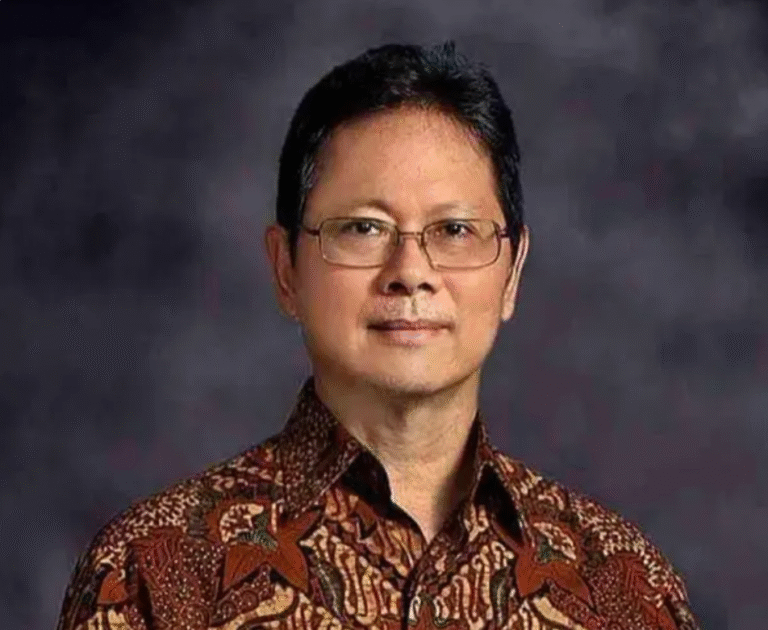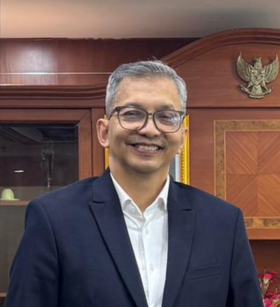
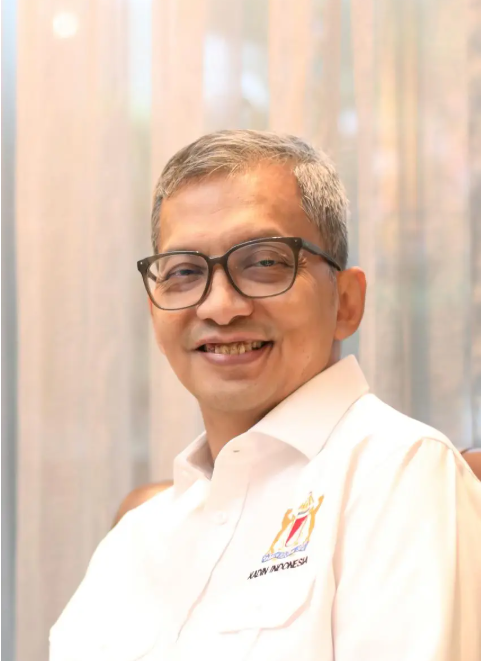
Teguh Anantawikrama. Photo: Personal collection.
By Teguh Anantawikrama
Vice Chairman, Indonesian Chamber of Commerce and Industry
UKMDANBURSA.COM – As the global order faces its most significant shift since the end of the Second World War, the word “sovereignty” is being redefined. For many, it is a political abstraction. For my family, it has always been a tangible, high-stakes project of engineering a nation from the ground up.
Today, as the conflict in the Middle East and the fragmenting of old alliances create a “tremendous shift” in the world order, Indonesia stands at a crossroads. But to understand where we are going, we must look at the genetic code of our independence.
Read more:
Strong Dollar, Fragile Balance: What Indonesia Needs to Prepare For
Effective Leadership
My maternal grandfather, Mr. Iman Soedjahri, understood that a nation without its own currency is a nation on borrowed time. In the heat of the revolution, he managed the printing of the OERI (Oeang Repoeblik Indonesia) in Aceh—the “Lifeblood of the Republic”—while Java was under blockade.
He later hand-carried President Sukarno’s Commando Baton to the United Nations in New York. It wasn’t a gesture of vanity; it was a delivery of proof. He was showing the world that Indonesia possessed the three essentials of a state: a people, a territory, and a functioning leadership.
At the same time, my paternal grandfather, a Major General who fought in the trenches alongside General Sudirman, provided the physical shield. He understood that sovereignty is not just signed on paper; it is defended in the mud.
Yet, years later, he showed an even greater form of courage. Alongside figures like H.R. Dharsono in the Petisi 50, he dared to challenge the very system he helped build when it strayed from democratic integrity. He taught us that true patriotism includes the courage to dissent.
Building the Nation’s Character
If my grandfathers built the “hardware” of the state, my parents provided the “software.” My mother, Prof. Edi Sedyawati, a descendant of Pangeran Diponegoro, dedicated her life to Indonesia’s cultural soul. As an archaeologist and dancer, she argued that a nation that forgets its ancient roots is a nation that can be easily swayed by the winds of globalization.
My father, Mohamad Hadimulyo, complemented this by building the nation’s character. Whether he was facing government bans as a newspaper editor or institutionalizing Pencak Silat through IPSI, his mission was the same: building the resiliency of the Indonesian individual. From providing soccer shoes to impoverished youth to helping PhD students study abroad, he knew that a sovereign state is only as strong as its most vulnerable citizen.
Read more:
The Need for Unfiltered Input and the Courage to Face Bitter Truths
Fighting for Resilience
Today, I view my work in re-engineering Indonesia’s travel and economic patterns as the 21st-century evolution of this lineage. We are moving into an era where “Resiliency” is the only true currency.
In a world of volatile energy markets and food insecurity, Indonesia’s path must be one of absolute self-sufficiency. We are not just a collection of islands for tourists to visit; we are becoming a Global Safe Haven.
By re-engineering how we move, how we produce energy, and how we secure our food supply, we are creating a “fortress of stability.” This is the modern interpretation of the Diponegoro spirit—ensuring that no matter how the “World Order” shifts, Indonesia remains an island of calm and a beacon of resilience.
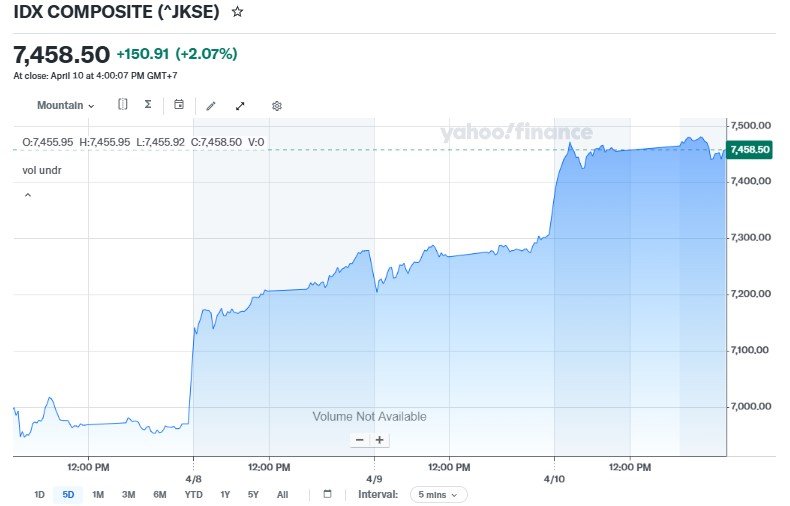
Sovereignty is not a static trophy won in 1945. It is a living, breathing process of “Re-Engineering.”
My grandfathers fought for the right to exist. My parents fought for the right to an identity. Today, we fight for the right to be resilient.
As the world faces an uncertain horizon, Indonesia’s greatest contribution to the global stage will be its ability to stand firm, fed by its own land, powered by its own resources, and guided by a century of principled leadership. ***