

Teguh Anantawikrama. Photo: personal archive.
By Teguh Anantawikrama
Vice Chairman, Indonesian Chamber of Commerce (KADIN)
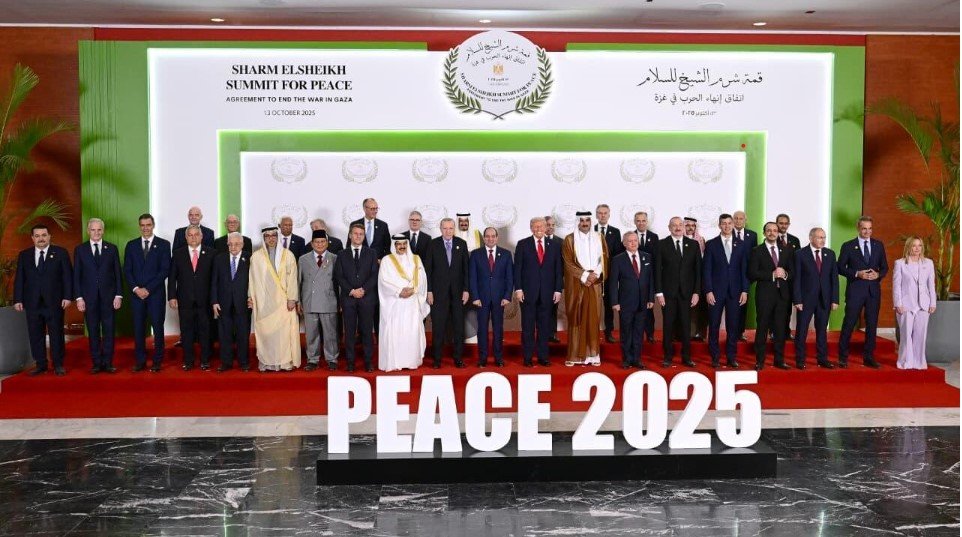
UKMDANBURSA.COM – Indonesia’s presence at the Emergency Summit for Gaza Peace Implementation is more than a gesture of solidarity. It is a concrete statement that Indonesia has evolved into a credible and respected middle power in today’s shifting geopolitical landscape.
In a world fractured by rivalries and mistrust, Indonesia has emerged not as a passive observer, but as a moral and diplomatic mover — a country capable of building bridges across divides and amplifying the collective conscience of humanity.
A Diplomacy Rooted in Conscience
Indonesia was born from struggle — a nation forged through the pain of colonization and the pursuit of independence. That history imbues Indonesia’s diplomacy with empathy and moral depth. Its concern for the Palestinian people, therefore, is not an act of posturing; it is an expression of historical solidarity and national identity.
Since the era of President Sukarno, Indonesia has adhered to the principle of a “free and active” foreign policy — rejecting alignment with any power bloc while actively promoting peace and justice. Today, that doctrine has matured into a progressive and equitable diplomacy, one that does not merely condemn violence but also seeks to initiate solutions.
Indonesia’s leadership at the Gaza summit sent a clear message to the world: we do not wait for peace — we pursue it.
Read more:
Wonderful Indonesia Gourmet
Military Strength as an Instrument of Peace
Indonesia’s commitment to deploying large-scale peacekeeping forces marks a turning point in its defense posture. As of 2025, more than 3,000 Indonesian peacekeepers have served in United Nations missions in Lebanon (UNIFIL), the Democratic Republic of Congo (MONUSCO), South Sudan (UNMISS), and the Central African Republic (MINUSCA).
This makes Indonesia one of the top ten troop-contributing countries to UN peacekeeping globally, and the largest contributor in Southeast Asia.
The message is clear: Indonesia’s military power is not a tool of aggression, but an instrument of stability and humanitarian protection. This evolution reflects a sophisticated understanding of 21st-century security — that peacekeeping, disaster relief, and human security are as vital as territorial defense.
Regional Leadership in ASEAN and the Indo-Pacific
Regionally, Indonesia has long been a linchpin of stability in Southeast Asia. As the 2023 Chair of ASEAN, Indonesia guided the bloc through a period of heightened regional tension — from the South China Sea disputes to the growing U.S.–China rivalry in the Indo-Pacific.
Under Indonesia’s leadership, ASEAN reaffirmed its commitment to the ASEAN Outlook on the Indo-Pacific (AOIP) — a strategic framework initiated by Jakarta in 2019. The AOIP envisions an open, inclusive, and cooperative regional architecture, rejecting the notion of bloc politics while promoting regional autonomy.
Indonesia’s quiet but firm diplomacy has also been instrumental in addressing the Myanmar crisis, fostering dialogue among competing factions and maintaining ASEAN unity amid division. This patient, consensus-driven leadership style is emblematic of Indonesia’s broader philosophy: strategic calm in turbulent times.
Becoming a “World Peace Keeper”
Indonesia’s transformation into a World Peace Keeper represents the culmination of decades of consistent foreign policy, moral leadership, and pragmatic engagement.
In a global environment marked by polarization, Indonesia stands as a balancing power — the world’s largest Muslim-majority democracy, advocating for moderation, multilateralism, and justice. The country’s voice resonates across developing nations and global institutions as a call for fairness and human dignity.
Indonesia no longer speaks about peace from the sidelines; it acts upon it through humanitarian missions, conflict mediation, and peacekeeping operations that reflect both courage and conscience.
The Economic Dimension of Peace Leadership
Indonesia’s growing leadership in peace and diplomacy is not only a moral imperative — it also carries significant economic dividends. Stability and credibility on the world stage translate into investor confidence, trade resilience, and global partnerships.
1. Investment Magnetism – Indonesia’s active role in promoting regional peace strengthens its position as a safe and predictable destination for foreign investment. In 2024 alone, the country recorded over US$48 billion in realized FDI, with increasing inflows from the Middle East, Japan, and the European Union — regions that value stability and moral authority in global affairs.
2. Strategic Economic Partnerships – Indonesia’s peace diplomacy has paved the way for bilateral and multilateral cooperation in infrastructure, energy transition, and digital trade. Peaceful regional relations through ASEAN and the Indo-Pacific frameworks lower geopolitical risk premiums and facilitate economic integration.
3. Soft Power and Brand Value – By being recognized as a World Peace Keeper, Indonesia enhances its national brand — projecting an image of reliability, moderation, and leadership. This contributes directly to tourism recovery, halal industry expansion, and cultural diplomacy, all of which are increasingly vital in a post-pandemic economy.
4. Defense Diplomacy and Industrial Gains – Peacekeeping participation also stimulates the defense technology and logistics sectors, as Indonesia modernizes its military capabilities for humanitarian deployment. This creates new industrial linkages and skilled employment opportunities within the domestic economy.
In essence, peace is not a cost — it is an investment multiplier. By anchoring its global image in moral leadership and regional stability, Indonesia positions itself not only as a geopolitical balancer but also as an economic hub of trust and cooperation in the Indo-Pacific century.
Read more:
Women Are Now Steering Indonesia’s Tourism Future
A New Role in a Restless World
The world today stands at a crossroads. Conflicts deepen, rivalries intensify, and global solidarity erodes. Amid this turbulence, Indonesia’s emergence as a guardian of peace offers hope — and direction.
With its strong democratic foundation, stable economy, and principled diplomacy, Indonesia has stepped out of the shadows of regionalism into the light of global leadership. We are no longer mere observers in the theater of world affairs.
Indonesia is part of the solution — a nation that stands not only for itself, but for peace, justice, and the shared future of humanity. Indonesia has changed: from observer to guardian of world peace. ***



6 thoughts on “Indonesia Takes the Lead: From Observer to Guardian of World Peace”